Supporting Milling Process Monitoring with Automated Anomaly Detection
The Challenge
Milling processes face significant challenges due to tool wear, excessive vibration, material inconsistencies, and other factors that can lead to compromised product quality, dimensional inaccuracies, surface defects, costly rework, scrap, or unexpected downtime.
For this reason, machine operators continuously monitor machines for unexpected sounds, unusual vibrations, and other signs of anomalous behavior.
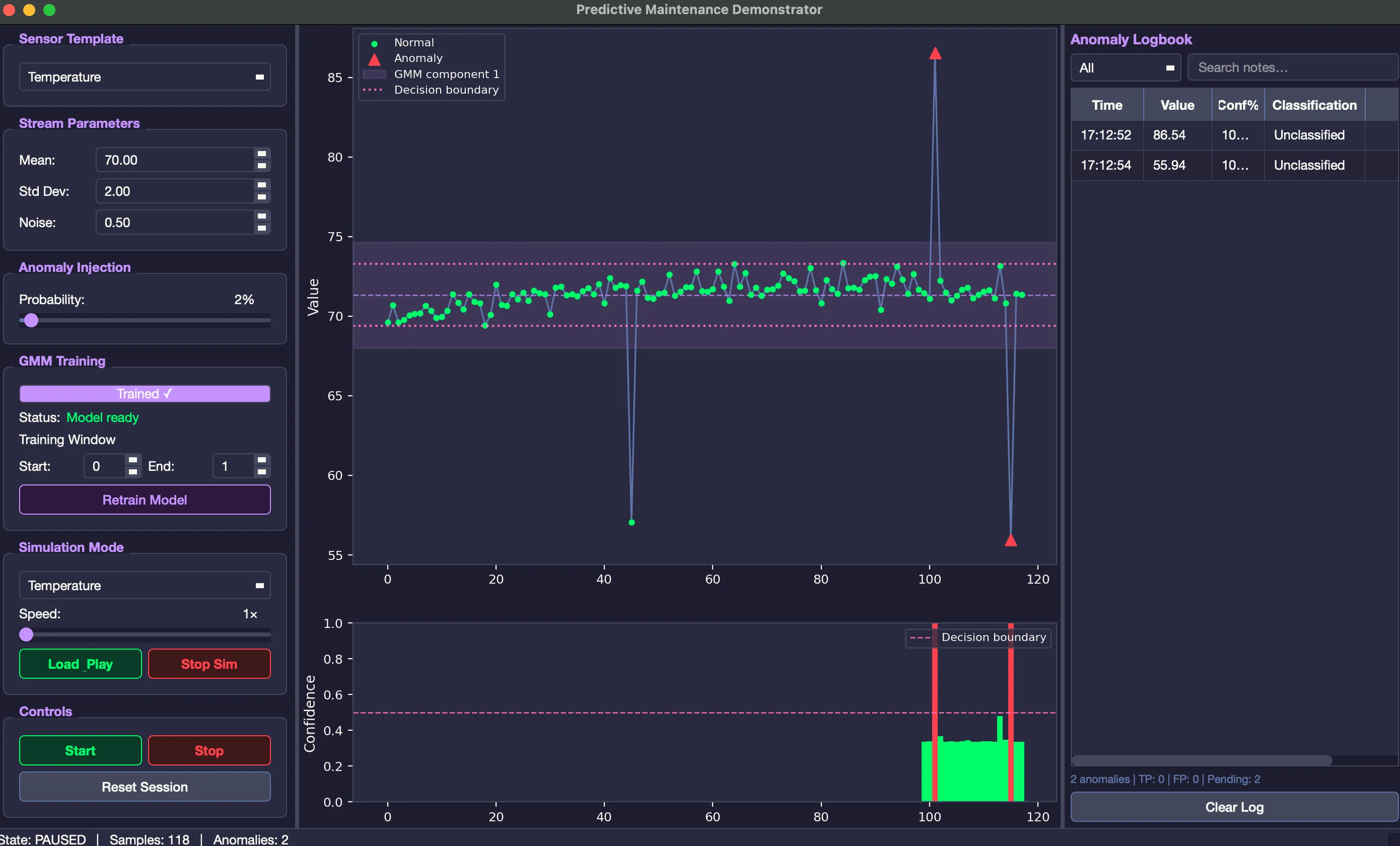
This demonstrator complements manual anomaly detection with an automated anomaly alerting system, improving efficiency, consistency, and reducing the risks induced by undetected issues.
What This Demonstrator Does
Phase 0: Data collection and analysis. In the first phase, machine signals during the milling of products will be collected and analyzed. Ideally, that requires setting up the CRM sensor box and collecting product quality data. It may also be possible to use similar sensors.
Phase 1: Learning. Once the data is available, an (AI) model of normal behavior will be learned.
Phase 2: Automated anomaly detection. After the training phase, the learned model will be applied to detect deviations from normal behaviour that may lead to bad product quality.
Signals will be continuously monitored, and alerts will be triggered if an anomaly is detected.
Phase 2.1 (optional): Adaptation. Throughout phase 2, feedback (e.g., from machine operators or through self-correcting loops) will be gathered, and models will be adapted as necessary.
What You Gain
- Reduced risk of producing scrap
- Reduced need for time-consuming product quality checks
- Reduced risk of unexpected downtime
- Data-driven insights into milling processes
Who Is This For?
This demonstrator is ideal for companies in the milling industry that aim to minimize risks caused by undetected anomalies (scrap, unexpected downtime, etc.) and support their staff in their daily monitoring tasks. The ideal company is open to exploring data-driven approaches and has the capability to collect real-time sensor data (e.g., using the CRM sensor box).
Estimated Cost to Implement
Total estimated budget: €0 – €1,000 for a basic setup (+ cost for sensor box)
- Sensor box
- Depending on what is available at the company
- Hardware to store and process sensor data and run models
- Device to display/ alert anomalies
Pilot Program
What does a pilot look like for this demonstrator?
During the pilot phase (2-4 weeks), we will deploy an anomaly detection system that alerts operators to anomalous machine behavior in near real-time.
- Training: The system will first be trained to understand normal behavior.
- Application: Once trained, the system will monitor milling processes and issue alerts for any behavior that deviates from the established norm.
- Feedback: Throughout the application phase and at the end of the pilot, we will collect feedback to improve the system.
Services provided during the pilot:
- On-site installation and configuration by the project team
- Training and introductory session for operators (half day)
- Remote monitoring and technical support during the pilot period
- Exploratory data analysis of SME’s sensor data
- Training an anomaly detection system based on the SME’s data
- Mid-pilot check-in visit
- End-of-pilot evaluation report with findings and recommendations
What you need to have / provide:
- A compatible CNC milling machine with accessible sensor data (ideally, the CRM sensor box)
- Milling multiple (ideally the same or similar) products on that machine during routine production
- Network connection (Wi-Fi or Ethernet) near the machine
- A dedicated contact person available during installation and for questions
- A dedicated contact person available to provide feedback during the pilot phase (e.g., by classifying detected anomalies as “true anomaly” or “false anomaly”) and at the end of the pilot phase
- Power outlet within 2m of the machine and space to place hardware (around size of a computer tower) and a monitor